How to Stop Saying Sorry (And What to Say Instead)
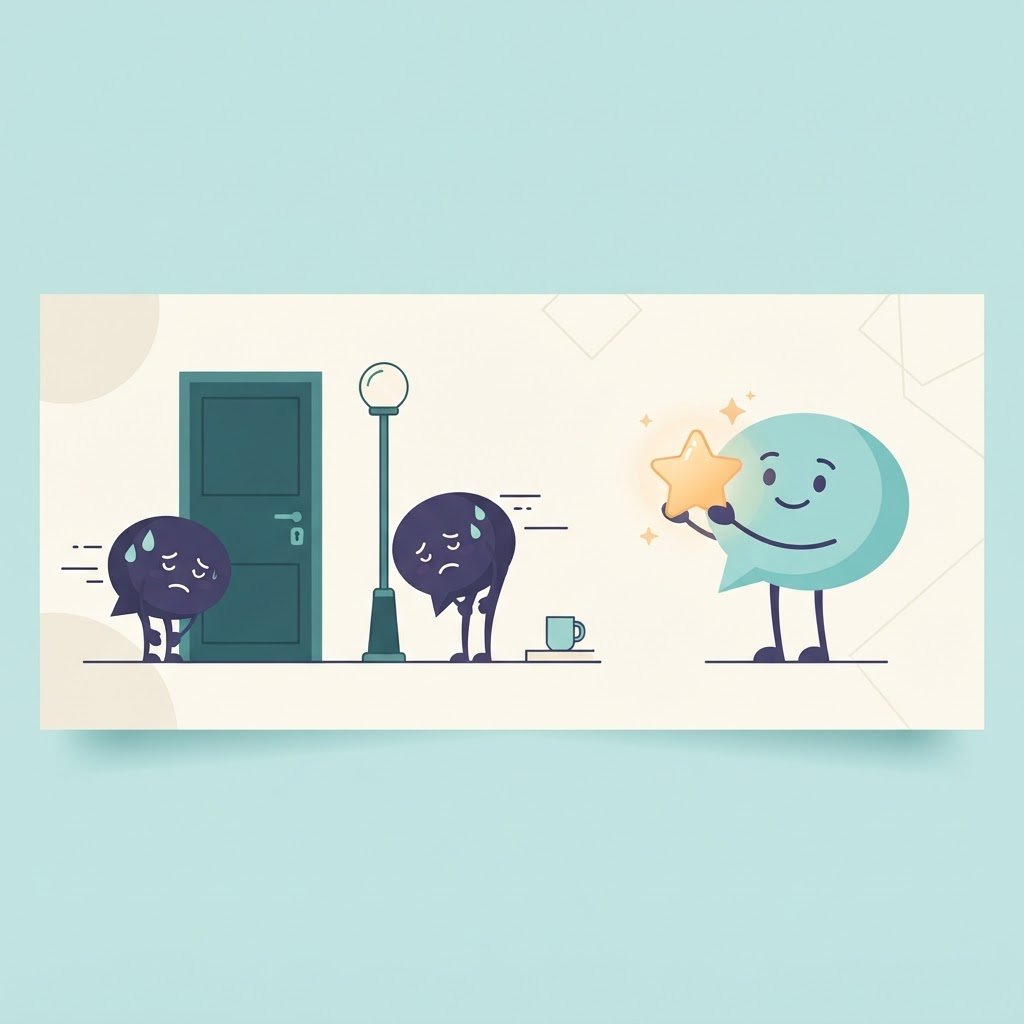
You've apologized to a coffee table. Maybe a door. Possibly a chair that you fully intended to sit in and the chair knew it. If any of this sounds familiar, welcome — you're in the over-apologizing club, and attendance is basically mandatory because nobody in the club has ever said no to anything.
Here's the thing: "sorry" was supposed to be a precious word, reserved for genuine regret. Instead, most of us spend it like it's expired coupons — apologizing for being late (fair), for the weather (not your department), and for existing in the general vicinity of another human being. This guide covers why we do it, what it quietly costs, and the exact what to say instead of "sorry" swaps for every situation.
Why We All Say "Sorry" Too Much (The Science of Ugh)
Over-apologizing isn't a personality flaw — it's usually one of three things:
- A peace-keeping reflex. Psychologists describe chronic apologizing as a safety behavior: a way to smooth interactions before anything has actually gone wrong.
- A confidence gap. When "sorry" precedes every opinion, it's often an apology for taking up space — which you're allowed to take up.
- Pure habit. Say it enough times and it stops meaning anything. You'll apologize to a vending machine and feel nothing.
None of these make you a bad person. All of them make you sound less confident than you are.
What Chronic Apologizing Actually Costs You
Every unnecessary "sorry" is a tiny withdrawal from your credibility account:
- It shrinks your real apologies. When everything is "sorry," nothing is. The word you'll need for the big stuff — the missed deadline, the fender bender — has been devalued to near zero.
- It makes you look unsure. "Sorry, but I think the numbers are wrong" undercuts a correct observation before anyone evaluates it.
- It hands out blame you didn't earn. Apologize for the meeting running long and watch everyone quietly agree it was your fault. It wasn't. Meetings have never once ended on time in recorded history.
The Golden Move: Say "Thank You" Instead of "Sorry"
This is the single best trick in the whole over-apologizing playbook, and it's almost embarrassingly simple. Apologies highlight the problem; gratitude highlights the patience:
- "Sorry I'm late" → "Thank you for waiting."
- "Sorry for the slow response" → "Thanks for your patience."
- "Sorry to dump all this on you" → "Thank you for taking a look at this."
Notice the magic: the same facts, zero self-flagellation, and the other person gets a compliment instead of an apology they now have to awkwardly wave off. Everybody wins, and nobody had to grovel.
12 Things to Say Instead of "Sorry" (Before → After)
Here's the full set of swaps, situation by situation:
- Interrupting someone: "Sorry to interrupt" → "I'd love to add one thing."
- Asking a question: "Sorry, quick question" → "Quick question:" (it was already quick. The sorry was just padding.)
- Reaching past someone: "Sorry, excuse me" → "Excuse me" (that's the whole thing. "Excuse me" IS the polite version.)
- Disagreeing: "Sorry, but I see it differently" → "I see it differently, and here's why."
- Sharing an opinion in a meeting: "Sorry, this might be a dumb idea" → "Here's an idea — tell me what's wrong with it."
- Not knowing something: "Sorry, I don't know" → "I'll find out and get back to you by tomorrow."
- Needing a deadline moved: "Sorry, I need more time" → "To do this properly, I need until Thursday. Can we make that work?"
- Bumping into a table (you know who you are): silent dignity. The table is fine. The table has always been fine.
- Canceling plans: "Sorry, I can't make it" → "I can't make it this time — rain check, and I mean it." (For a whole toolkit of warm, honest declines, see our guide to how to politely decline an invitation.)
- Asking for help: "Sorry to bother you" → "Could you give me a hand with this when you have a minute?"
- Following up (again): "Sorry to chase this" → "Circling back on this — it's the last nudge from me."
- Someone else bumps into YOU: "Sorry!" → ...nothing. You were the stationary object. Stand there and enjoy the apology you're owed.
For the workplace versions, see our guide to professional ways to say it.
When You SHOULD Still Say Sorry
To be clear: real apologies are still on the menu, and they're delicious. Say "sorry" — sincerely, specifically, once — when you've genuinely caused harm: you broke something, hurt someone, or missed something that mattered. A strong apology is a three-parter:
- Name what you did ("I missed the deadline").
- Acknowledge the impact ("I know it held up your launch").
- State the fix ("I've set a reminder so this doesn't happen again").
Notice what's missing: the words "if," "but," and "I just feel like." That's an apology. Everything else is a costume.
How to Stop Apologizing So Much (A One-Week Plan)
- Count them. For two days, tally every "sorry" that leaves your mouth. The number will horrify you. That's the point.
- Catch, pause, swap. For three days, every time "sorry" starts to form, ask: did I cause harm? If no, use the thank-you flip or just delete the word.
- Save it up. By day seven, notice how your remaining "sorrys" carry actual weight. Watch people take them seriously again.
For more on the confidence habits behind this — cutting hedges, leading with the point, matching your tone — see our guides to sounding smarter in any conversation and choosing the right tone for any message.
Rewire the Reflex
Knowing what to say instead is step one. Doing it mid-sentence, when the "sorry" is already loading — that's the hard part. That's exactly what Sound Smarter is for: paste your overly apologetic message, and get a confident, natural rewrite in seconds — no groveling, no over-correction, just you minus the unnecessary guilt.
Try your first rewrite free on Sound Smarter. Your coffee table will thank you.